Saturday, July 31, 2021

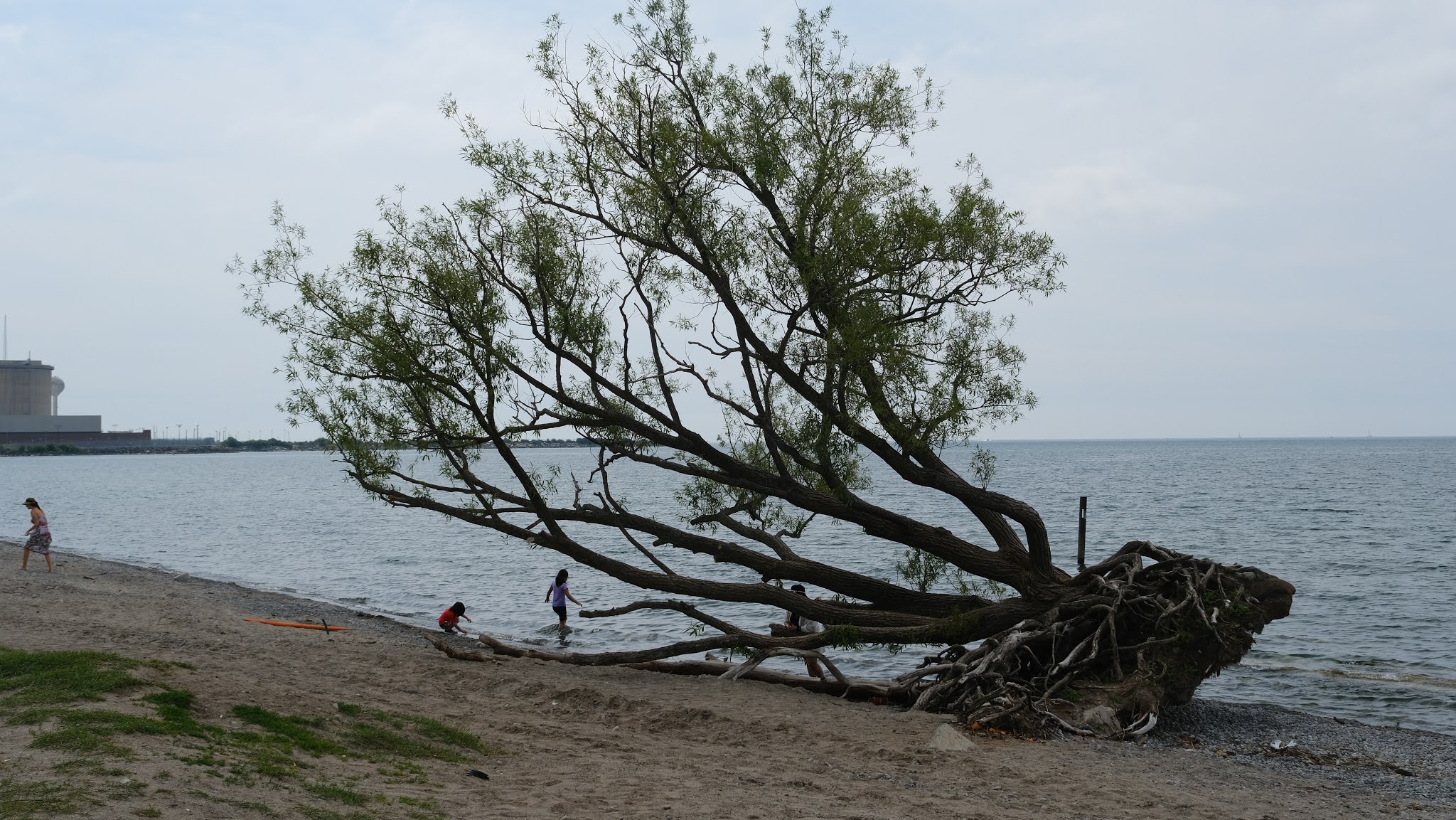
Taking the Long Weekend Off

It's another long weekend here in the Great White North. This one is known as Simcoe Day in Ontario and has other names as well. It's generally just called Civic Holiday, but not everyone gets it off as it's not a formal statutory holiday. 

But I am taking it off anyway. I'll be back on Tuesday. 

In the meantime, here's another flower for you. 


Friday, July 30, 2021

Doublng Down on Delta

It looks like the spread of the Delta variant means that we are going to have to put up with COVID-19 for some time yet. According to a slide presentation by the Centre for Disease Control (CDC) in the US, it is as contagious as chickenpox and can spread to and be spread by people who are fully vaccinated.  

From the Washington post:

It cites a combination of recently obtained, still-unpublished data from outbreak investigations and outside studies showing that vaccinated individuals infected with delta may be able to transmit the virus as easily as those who are unvaccinated. Vaccinated people infected with delta have measurable viral loads similar to those who are unvaccinated and infected with the variant.

“I finished reading it significantly more concerned than when I began,” Robert Wachter, chairman of the Department of Medicine at the University of California at San Francisco, wrote in an email.

CDC scientists were so alarmed by the new research that the agency earlier this week significantly changed guidance for vaccinated people even before making new data public.

The data and studies cited in the document played a key role in revamped recommendations that call for everyone — vaccinated or not — to wear masks indoors in public settings in certain circumstances, a federal health official said. That official told The Post that the data will be published in full on Friday. CDC Director Rochelle Walensky privately briefed members of Congress on Thursday, drawing on much of the material in the document.

Here are the slides from the CDC.

This is a Twitter thread from Dr. Bob Wachter, who is quoted in the article. 

Thursday, July 29, 2021

The Prose of Science Fiction and Fantasy

Science fiction is often thought of as a literature of ideas, but that gives it short shrift. Like any other genre, there's a wide range of writing styles and quality, and much of it overlaps with what is generally considered "literary" fiction. 

In A Love Letter to Imaginary Worlds: The Prose of Science Fiction and Fantasy, Christine Sandquist takes a long look at the prose style of modern SFF. 

If there’s one thing in science fiction and fantasy that irks me more than anything, it’s the tendency for it to be dismissed by non-readers of the genre as filled with pulp and fluff. Even those who have dipped their toes into SF&F may be unaware of the vast swathes of gorgeous writing waiting to be discovered, hovering just out of sight. Very often, SF&F works that are generally considered to be more “literary” such as Oryx and Crake by Margaret Atwood, The Road by Cormac McCarthy, Brave New World by Aldous Huxley, or Cloud Atlas by David Mitchell are shelved not with SF&F… but instead in fiction, solely because SF&F is not perceived as “serious.” Naturally, there’s nothing wrong with pulp and fluff – if that’s what you enjoy, fantastic! I support you! I love it too! It is, however, absolutely ridiculous to relegate an entire genre into the pulp press and is frankly offensively dismissive of the landmark works of literature within it. SF&F has room for all types of writing, from the experimentally ergodic to the pulpiest of pulp. 

SF&F has been filled with gorgeous, prosaic writing ever since its inception. To say otherwise is both myopic and factually incorrect. In the 1920s, we had Hope Mirlees. In the 40 and 50s, Mervyn Peake. In the 70s, we had Samuel R. Delany and Patricia McKillip. Janny Wurts entered the genre in the 80s. In more recent decades, voices such as Amal El-Mohtar and Sofia Samatar have made their debut. Today and throughout history, we have had multitudes of authors writing delightfully lyrical prose, every word, every phrase, every sentence forming a love letter to writing and the worlds we’ve created.

The authors and books discussed below are nowhere near exhaustive, but they will provide a wonderful starting point for anyone interested in science fiction and fantasy that takes joy and pleasure not just in plot or worldbuilding, but in the very act of writing itself. By the very nature of the beast, I’ll never be able to include everyone here. This is a beginning, an introduction, not a conclusive be-all and end-all list. The featured authors are featured not always because they are the very best around, but often because I am more familiar with them or have read them more recently. The authors suggested in addition to those discussed in depth are just as worth a look as the ones I dedicate a full paragraph to. 

When I was studying English Literature in university, I tried to get approval to doing a masters focusing on SFF. I got shot down in flames. As far as my professors were concerned, there were only two authors worth studying: Ray Bradbury and (oddly) H. P. Lovecraft. I don't think I'd have a problem now and Sandquist article shows why. 

Wednesday, July 28, 2021

Some Photography Links - July 28, 2021

 Here are some articles about cameras and photography.

Fujifilm X-S10 with 16 - 80 mm. F4, 1/1300 second at F8, 16 mm., ISO 400

Tuesday, July 27, 2021

American Heat Wave Is Just a Preview of Worse to Come

This year has been a bad one in North America. We've been dealing with extreme heat, drought, wildfires, and we aren't even halfway through the summer. Unfortunately, as this article in Foreign Policy points out, it's not going to get better any time soon and not until we start taking some serious steps to reduce our impact on the environment. 

When temperatures soared in late June, U.S. President Joe Biden pledged $37 million to support wildfire mitigation projects in one hard-hit California county and promised to raise the wage of federal firefighters to $15 an hour. Earlier, in May, the government also announced that the Federal Emergency Management Agency would double the funding available for states to brace for extreme weather disasters.

But in Washington, Democrats have long faced political hurdles to combating climate change, particularly from Republicans. Former U.S. President Donald Trump famously called climate change a hoax and withdrew the United States from the Paris climate accord; more recently, Republican Sen. Ron Johnson dismissed the climate crisis as “bullshit.” These divides are also reflected more broadly in each parties’ base: Almost half of Democrats say addressing climate change is a top personal concern, compared to just 10 percent of Republicans, according to the Pew Research Center. 

In June, a group of Republicans formed the Conservative Climate Caucus to address climate change—but the group has refused to endorse specific policies, and its leader, Rep. John Curtis, has said that climate change should not be called a “crisis.” And while a separate bipartisan infrastructure bill for $579 billion—which activists hoped would focus on combating climate change—earmarked $47 billion for climate resilience, it excluded Biden’s key measures, including a clean electricity standard, just when the havoc currently being caused by climate change was made most clear. 

“The truth is, we’re playing catch-up,” Biden said in June. “This is an area that’s been under-resourced.”

Monday, July 26, 2021

Featured Links - July 26, 2021

 Links to things I found interesting but didn't want to do a full blog post about.


Sunday, July 25, 2021

Photo of the Week - July 25, 2021

Here's a hazy sunset earlier this week. The haze is from wildfires in Northern Ontario.


Fujifilm XS-10 with 16-80 mm. F4 @ 29 mm. F8 at 1/160 second, ISO 400


Saturday, July 24, 2021

Some Music Links

Some good music has come out recently. 

David Crosby, formerly of the The Byrds and Crosby Stills Nash and Young has a new album, For Free. The title comes from the well-known Joni Mitchell song, which he covers on the album. Crosby is still in fine voice and the album sounds wonderful. None of the songs are likely to become big hits but it's a pleasant listen, and I'm glad to see he's still with us and vital.

Alice Cooper is another older performer who still has some life left in him. In his latest album, Detroit Stories, he returns to the early days of the Detroit hard rock music scene. I went to university in Windsor and saw many of thr Detroit bands that were popular. The Stooges, the Bob Seger System, Mitch Ryder and the Detroit Wheels, SRC, The Frost, and Savage Grace are the ones that were big at the time, though I never did see The MC5 to my everlasting regret. The new album starts out with a crunchy version of Lou Reed's Rock and Roll. (Reed played with several Detroit musicians in the 70s). From Rolling Stone: "Cooper recorded the album with an array of fellow Detroit musicians, including MC5’s Wayne Kramer, the Detroit Wheels’ Johnny “Bee” Badanjek, celebrated jazz and R&B bassist Paul Randolph, and the Motor City Horns (long associated with Bob Seger and the Silver Bullet Band). Cooper’s long-time collaborator Bob Ezrin produced the record." Fittingly, the album concludes with Bob Seger's "East Side Story". If you like loud basic hard rock this one is for you.

Finally and for something completely different, the Metropolitan Opera's recent revival of Philip Glass's Akhnaten has been officially released. It's available to stream or purchase on the major streaming sites and you can get a DVD directly from the Met. I've seen the Met's production a couple of times now and I highly recommend it. Although on a purely musical level, I prefer his opera, Satyagrapha, given the number of performances of Akhnaten over the last couple of decades, I think it's entered the operatic canon as Glass's masterpiece. The audio recording is excellent but the opera really needs the visuals to be appreciated so maybe think about getting the DVD.

Friday, July 23, 2021

Anansi Boys Will Become a TV Series

Neil Gaiman has announced that his novel, Anansi Boys, is in production to become a six-episode TV series on Amazon Prime TV. This makes the third of Gaiman's books to become a series ‒‒ the other two being Good Omens and American Gods

Douglas Mackinnon agreed to co-showrun it with me, because I knew I never wanted to be the sole showrunner of anything again and after the Good Omens experience I would trust Douglas with my life and (which actually may be more important) with my stories. We planned to shoot it all around the world...

Paul Frift had been the producer of Good Omens during the South African leg of the shoot, and was indomitable, so we were very happy when he agreed to come on board as our producer.

And then in 2020 Covid happened. The Prime Directive of making Big Budget International television suddenly became “Don't Travel and Especially Don't Travel All Around The World. We Mean It.”

Douglas came up with a Plan to bring Anansi Boys to the screen that was audacious, creative and brilliant. All we needed to make it work was the Biggest Studio in Europe and access to an awful lot of cutting edge technology. 

The biggest Studio in Europe happens to be in Leith, outside Edinburgh. 

Before Covid, the plan had been first to make Anansi Boys, then immediately to make Good Omens 2. (Good Omens 2 was going to be shot in Bathgate, outside Glasgow.) That was the plan we were working on through most of 2020. Then, in September 2020, Douglas and I got a call from Amazon. “We've got good news and complicated news for you,” they said. “The good news is we are greenlighting both Good Omens and Anansi Boys. The complicated news is... well, how do you feel about making them both at the same time?”

So...

Anansi Boys is coming.

I am looking forward to this. I've not read the book but have heard enough of the BBC audio adaptation to figure I should enjoy it. I do hope it turns out better than American Gods, which was a disappointment. If  it's as good as Good Omens, I will be very happy. 

Thursday, July 22, 2021

2021 World Fantasy Award Finalists

The finalists for the 2021 World Fantasy Awards have been announced. The awards will be presented at the World Fantasy Convention in Montreal on November 4-7. 

These are the finalists for best novel.

  • Piranesi by Susanna Clarke (Bloomsbury)
  • Trouble the Saints by Alaya Dawn Johnson (Tor Books)
  • The Only Good Indians by Stephen Graham Jones (Saga Press/Titan UK)
  • Mexican Gothic by Silvia Moreno-Garcia (Del Rey US/Jo Fletcher Books UK)
  • The Midnight Bargain by C. L. Polk (Erewhon Books US/Orbit UK)
  • Wednesday, July 21, 2021

    Remembering Gus Grissom

    Today is the 60th anniversary of the suborbital flight of Gus Grissom. It was the second flight in NASA's Mercury program, and although the flight was successful, it almost turned into a tragedy when Grissom almost drowned after the landing. Grissom would go on to become the pilot for the Apollo 1 mission, only to die in a fire on the launch pad during a mission simulation. Had that not happened, he might have been the first man to step onto the moon instead of Neil Armstrong. 

    But a new book by author George Leopold about Grissom’s life—Calculated Risk: The Supersonic Life and Times of Gus Grissom—and a recent interview with the head of NASA’s recovery options for the Mercury program, Bob Thompson, dispels that fiction. From these measured accounts, Grissom emerges as a quick-thinking hero. He reacted decisively in an uncertain situation when otherwise this mission would have ended in death. Such an accident early in NASA's space program could have given President Kennedy pause over the country’s nascent Moon-landing ambitions at a time when the US lagged badly behind the Soviet Union.

    More than half a century later, Grissom’s name has faded from memory. Shepard has the honor of the first US spaceflight, John Glenn made the first orbital flight, and Neil Armstrong stepped on the Moon. Yet after an all-too-brief career that ended tragically in the 1967 Apollo 1 fire, Grissom deserves recognition not as an unlucky footnote but as a genuine hero. And for today’s astronauts, Grissom's near-death experience in the Atlantic Ocean has renewed importance, offering a sobering reminder of the sea's peril as NASA plans to return its Orion capsule from deep space again by way of the ocean.

    “Water is a great place to land in, but it’s a hell of a place post-landing,” Thompson told Ars. “Let me tell you, you can hurt yourself in the ocean.”

    Tuesday, July 20, 2021

    ARCs Explained

    If you've been involved in publishing or you collect books, you probably have seen an ARC, otherwise known as an advance reading copy. Back when I was reviewing books for a newspaper, I used to get them, and I still have several. At the time, they were usually an unedited (or at least not copy edited) version of the book in a plain cover and were provided to reviewers in advance of publication so the reviews would come out when the book was published. 

    They still perform that function, but as Andrew Liptak points out in this blog post, the marketing strategy around them has changed. 

    In the years that I've been reviewing and writing about books, there's been an interesting sort of change to the format. Early on, they'd be pretty basic: a bland white/grey/green cover slapped onto the book's contents, or maybe with the book's cover art printed on it. They're not as durable as a finished copy. They'd be accompanied by a letter from the publicist that features the relevant details about the book and its release, advanced praise, and so forth. They came with a warning that the contents weren't final, and you'd likely come across typos that would later be corrected in the copyediting process.

    Jim DeMaiolo, who recently retired as Tachyon's Marketing Director, noted that when he started out years ago, "ARCs were called galleys and they could be — literally — the manuscript copies into a galley-sized book with a plain colored paper cover and the marketing and publicity on a sheet that was inside the book, as well as, printed information on the cover," he explained. "Many times (as when I got to read the book The Game of Thrones it was literally the manuscript from George R. R. Martin. No one bothered to bind it or to send it to a printer."

    That format has begun to change a bit in the last decade or so: ARCs became more like regular trade paperbacks: they might feature the full-cover artwork that would end up on the final edition, or in some cases, might feature beautiful embossing, giant quotes, specialized artwork, and a tiny label somewhere on there that that particular copy featured uncorrected text and wasn't for sale. In some cases, those changes are usually a good indication of the PR budget that the publisher is putting behind any given title. A more elaborate ARC typically means that a publisher is putting more of its weight behind that title.

    "Now," DeMaiolo noted "they are basically the copyedited book with a few extra pages for sales information and publication information. They are even designed and laid out like the final book. It is a lot of work and that means that the books for say 2022 have to be basically copy edited and designed at least six months in advance of publications, usually farther ahead for blurbers and the top reviewers."

    Monday, July 19, 2021

    Featured Links - July 19, 2021

     Links to things I found interesting but didn't want to do a full blog post about.


    Sunday, July 18, 2021

    Photo of the Week - July 18, 2021

    Here are some more flowers from my front yard.

    Fujifilm X-S10 with 16-80 mm. F4 at 74 mm. F8 at 1/220 second, ISO 640


    Saturday, July 17, 2021

    The Salvation Sequence by Peter F. Hamilton

    This will be a short review of a very long trilogy. 

    Peter F. Hamilton is a British writer whose career is built on writing  long space operas. He often repeats the same motifs in varying forms; he has a thing about interstellar travel based on wormholes and portals. He's also very good at coming up with believable and nasty aliens (MorningLightMountain in the Commonwealth Saga is one of the best aliens in modern SF).

    The Salvation Sequence consists of three novels: Salvation: A Novel, Salvation Lost, and Saints of Salvation. Like many of his other books, we have instant travel between stars and nasty aliens. I'm not going to get into describing the plot because I don't have all morning; instead, I'm going to shamelessly crib from Wikipedia.

    Hamilton's Salvation sequence involves two concurrent story lines. One is set during the year 2204. In this period humanity has developed near-instantaneous space travel via a network of QSE (quantum-spatial entanglement) portals and are using them to begin spreading out into the galaxy. As a consequence of this technology, crewed spaceships are unnecessary. When an unknown vessel is found on a recently explored world, a team of specialists are sent out to investigate both the craft and the astonishing contents therein. The other story line is set much farther in the future. It follows a genetically engineered team of special forces designed to confront and destroy an enemy who are following their religious agenda of harvesting all sentient species in the galaxy.

    It took me more than six months to work my way through the trilogy, which is over 1600 pages long. That's about eight standard novels, or what used to be a standard novel. I enjoyed quite a bit of it, but some of it was a real slog, and I found myself skimming a lot, especially in the last novel. Hamilton desperately needs to be edited heavily; I'd have cut the trilogy down to two books, at least.

    Of all of Hamilton's works, I'd rate this somewhere in the middle after The Commonwealth Saga, The Reality Dysfunction, and Fallen Dragon. Recommended only for Hamilton fans. 


    Friday, July 16, 2021

    Some Good News About Another Vaccine

    By now, if you hear the word "vaccine", you probably think COVID-19. But there are obviously many other vaccines in use and under development, and there's good news about another one, a malaria vaccine.

    The researchers report a vaccine efficacy of 77% in the higher-dose adjuvant group, and 71% in the lower dose adjuvant group, over 12 months of follow-up, with no serious adverse events related to the vaccine noted.

    Following these results, the Phase IIb trial, which was funded by the EDCTP2 programme supported by the European Union (grant number RIA2016V-1649-MMVC), was extended with a booster vaccination administered prior to the next malaria season one year later.

    This is big news. Malaria is a scourge that kills more than 400,000 people a year, and the malaria parasite has been very good at evading previous attempts to create a vaccine.  

    Thursday, July 15, 2021

    Frum on Trump, Again

    David Frum, currently a staff writer for The Atlantic, has been writing about Donald Trump since well before the 2016 election. He's one of the few political commentators that I read regularly and take seriously. He's just published another article in The Atlantic about the current state of Trump and his followers.

    The Trump movement was always authoritarian and illiberal. It indulged periodically in the rhetoric of violence. Trump himself chafed against the restraints of law. But what the United States did not have before 2020 was a large national movement willing to justify mob violence to claim political power. Now it does.

    Is there a precedent? Not in recent years. Since the era of Redemption after Reconstruction, anti-government violence in the United States has been the work of marginal sects and individual extremists. American Islamic State supporters were never going to seize the state, and neither were the Weather Underground, the Ku Klux Klan killers of the 1950s and ’60s, Puerto Rican nationalists, the German American Bund, nor the Communist Party USA.

    But the post-election Trump movement is not tiny. It’s not anything like a national majority, but it’s a majority in some states—a plurality in more—and everywhere a significant minority, empowered by the inability of pro-legality Republicans to stand up to them. Once it might have been hoped that young Republicans with a future would somehow distance themselves from the violent lawlessness of the post-presidential Trump movement. But one by one, they are betting the other way. You might understand why those tainted by the January 6 attacks, such as Senator Josh Hawley of Missouri, would find excuses for them. They have butts to cover. But Hawley is being outdone by other young politicians who weren’t in office and seemed to have every opportunity to build post-Trump identities—including even former Trump critics like the Ohio Senate aspirant J. D. Vance. Why do people sign up with the putschists after the putsch has failed? They’re betting that the failed putsch is not the past—it’s the future.

    I think he's beginning to get worried, and you should be too.  

    Wednesday, July 14, 2021

    Fracking Is Even Worse Than You Thought

    Fracking is demonstrably an environmental nightmare. As well as the impacts of the fossil fuels extracted with it, there's widespread pollution of water tables and even earthquakes in some areas where fracking is widespread. Now there's another nasty impact that could be the worst of all. 

     In a mashup of two environmental dangers, fracking has been producing PFAS. For at least a decade, the Environmental Protection Agency has allowed oil companies to use certain chemicals for fracking, even though the agency knew they could degrade into PFAS—a group of highly toxic chemical compounds—over time.

    Internal EPA documents, secured through a Freedom of Information Act and released by Physicians for Social Responsibility on Monday, show that in 2011 under President Barrack Obama, the agency greenlit the use of three chemicals known as P-11- 0091, P-11-0092, and P-11-0093. Each can help oil flow out of the ground more readily. The approval came despite the fact that the EPA itself had raised concerns about the substances’ effects on human health.

    The findings suggest that between 2012 and 2020, the substances were used in more than 1,200 wells across Arkansas, Louisiana, Oklahoma, New Mexico, Texas, and Wyoming, based on the FracFocus database, which tracks chemicals used in fracking operations. Since not all states require companies to report which chemicals they use, the actual number of well where the toxic chemicals were used could be much higher.

    If anyone knows if these chemicals are licensed for use in Canada, please leave a comment.  

    Tuesday, July 13, 2021

    Is It Time to Scale Back Travel?

    The pandemic has drastically reduced the number of people travelling, especially by air or on cruises. That's hard for industries and cities that rely on travel, but it's a good thing for the environment. Now that people are beginning to travel again, is it time to consider scaling back on travel to reduce the impacts on the planet? That's the point made in this New York Times opinion piece

    I have written already about how the pandemic should prompt a rethinking of air travel. This is most true in the business world. Sure, there’s something magical about meeting face to face, but in an age of pretty good videoconferencing, there isn’t magic enough to justify the extreme environmental costs of routine flight. But flying is so carbon intensive — your share of the emissions from a single round-trip trans-Atlantic flight is almost enough to wipe out the gains you might get from living car-free for a year — that it’s worth considering limiting leisure plane trips, too. Some people can afford to travel to Europe every year, maybe even several times a year. I’m not one for flight shaming, but that level of indulgence ought to earn some measure of social opprobrium.

    Cruises present an even better target for radical reform, if not outright prohibition. The early days of the pandemic highlighted the cruise industry’s vulnerability to contagion, but getting disease under control should be just the first step for this most polluting of conveyances. According to one study, a midsize cruise ship can emit as much particulate as one million cars. One cruise company alone, Carnival, was responsible for 10 times as much sulfur oxide as that emitted by the roughly 260 million passenger cars on European roads in 2017, a 2019 analysis found.

    There may be a solution of sorts to some travel. I've been watching quite a few walking tour videos recently. People are creating videos of their walks in cities like London; some are even live streaming them. Given good internet access during a walk, it should be possible to hire a "personal walker" who could walk along a route that you pick and change the view to include things that you suggest during the walk. Perhaps it wouldn't be as pleasant as a walk in a foreign city, but it would be a lot better for the environment than flying on a jet for eight hours.  

    Monday, July 12, 2021

    Featured Links - July 12, 2021

    Links to things I found interesting but didn't want to do a full blog post about.